Impressions from the Investuok annual conference
Last Saturday, BeMyBond CEO Indrė Dargytė took part in the Investuok magazine's annual conference, where she also delivered a presentation on Bonds vs. Crowdfunding.

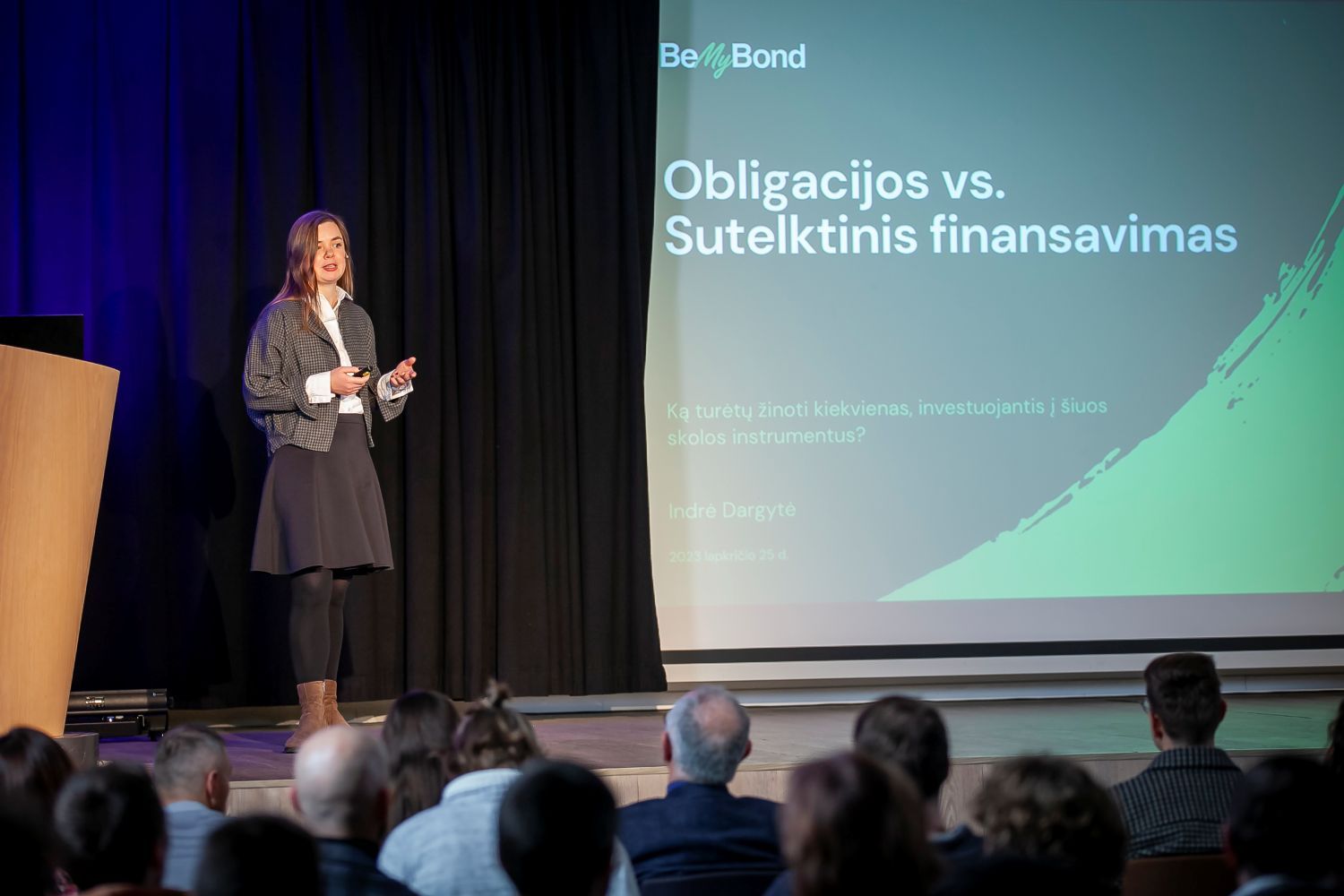
Last Saturday, BeMyBond CEO Indrė Dargytė took part in the Investuok magazine's annual conference, where she also delivered a presentation on Bonds vs. Crowdfunding. Below we share one of the key insights about the current bond market in Lithuania. Another important topic — what is changing with the new crowdfunding regulation that came into force this month — will follow in our newsletter soon.
At present, an unusual situation has emerged in the Lithuanian bond market, where the size of a bond's coupon no longer reflects the level of risk of the project or company. Both reputable, reliable companies and development projects that don't yet have tenants are borrowing at double-digit interest rates.
One example can be seen in three bond issues currently underway or just completed: Modus grupė (7 % + 6-month Euribor), the St. Jokūbas project (10 %), and the Lelijos factory conversion project (10.5 %). The only thing these bond issues have in common is a coupon of at least 10 %. However, their risk levels differ significantly.
So that this comparison would not be limited to these particular issues, but would also help investors assess similar issues themselves in the future, the presentation included examples of questions investors could ask issuers.
In any case, the key question an investor should ask is: what is the existing or future cash flow from which the bonds will be serviced and repaid? If it is a future cash flow, what conditions need to be met for such cash flows to actually materialise?
Both the Modus grupė bonds (previously 5 %) and the Lelijos project bonds (previously 7.5 %) are intended to refinance earlier issues, while the St. Jokūbas issue is part of a bond programme whose initial coupon was 6 %. With the cost of debt continuing to rise, the question arises as to what needs to (and can) happen for investors to feel reasonably confident about their investment. This could mean securing future tenants for the project, or finding alternative means of financing, among other possibilities.
In our view, when it comes to at least two of these issues, there are somewhat more assumptions and necessary conditions for the projects to succeed than one would like, especially given the current macroeconomic situation. That said, we always hope and wish for everything to work out successfully.